Hastelloy, Titanium, Monel, Inconel reactors for highly corrosive media and demanding environments.
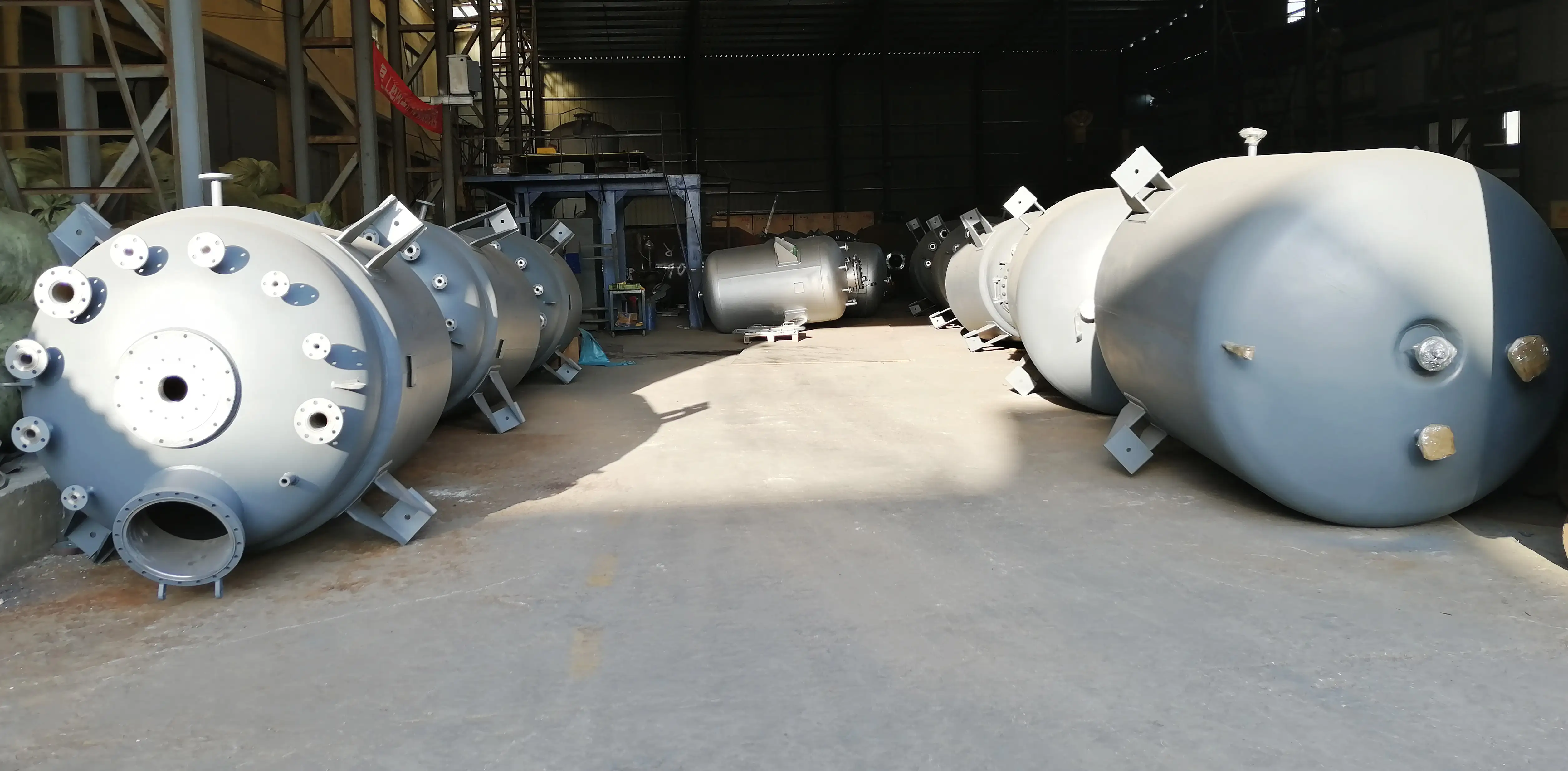
When standard stainless steel won't withstand your process media, our non-ferrous metal reactors provide the corrosion resistance you need. We work with Hastelloy (C276, B2), Titanium (TA1, TA2, TA10), Monel 400, and Inconel 600/625 — all with full material certification and traceability.
Every alloy requires specialized welding procedures, argon backing gas protection, and post-weld heat treatment. We don't just weld exotic metals — we understand the metallurgy behind them. That knowledge prevents cracks, sensitization, and unexpected failures in service.
Material Selection
Wrong material selection is the #1 cause of premature reactor failure. Tell us your medium, concentration, temperature, and we'll recommend the optimal material.
Excellent resistance to chloride stress corrosion cracking. Ideal for oxidizing and reducing acid environments. The go-to choice for aggressive chemical processes.
Outstanding performance in oxidizing acids, seawater, and chlorine-containing media. Lightweight with excellent strength-to-weight ratio.
Excellent resistance to hydrofluoric acid, alkaline solutions, and seawater. Commonly used in fluoride processing and marine environments.
Superior high-temperature strength and oxidation resistance. Ideal for processes requiring both corrosion resistance and elevated temperature performance.
Quality Assurance
Welding Hastelloy, titanium, and other exotic metals requires specialized procedures. Our welders are qualified per ASME Section IX, and every weld is inspected.
Welding Procedure Specifications (WPS) developed and qualified for each alloy type before production begins.
Argon backing gas protection during welding to prevent oxidation and ensure weld integrity.
Post-weld heat treatment where required to restore corrosion resistance and relieve stresses.
Every weld joint inspected by RT, UT, PT, or MT as required by code and service conditions.
Pickling and passivation treatment to restore the protective oxide layer on stainless and nickel alloys.
Complete weld records including WPS, PQR, welder qualifications, and NDT reports.
Tell us your media and process conditions — we'll recommend the right material.