Nickel-based alloy construction for chloride corrosion at elevated temperature and pressure
Hastelloy is a nickel-based corrosion-resistant alloy, divided into two main families: nickel-chromium alloys and nickel-chromium-molybdenum alloys. It is valued for good corrosion resistance and thermal stability, and Hastelloy plate is used across chemical industries handling both oxidising and reducing media.
The specific strength of these alloys comes from their composition. The high molybdenum and chromium content is what gives the alloy its resistance to chloride ion corrosion, and the tungsten content pushes corrosion resistance further still. C276 is one of only a few materials that withstand wet chlorine, hypochlorite and chlorine dioxide solutions, and it shows marked resistance to concentrated chloride salt solutions such as ferric chloride and cupric chloride.
The customer's duty combined chlorides with elevated temperature and high pressure. Under those conditions 316L stainless steel does not give an acceptable service life, so a nickel-based alloy was required for the wetted construction.
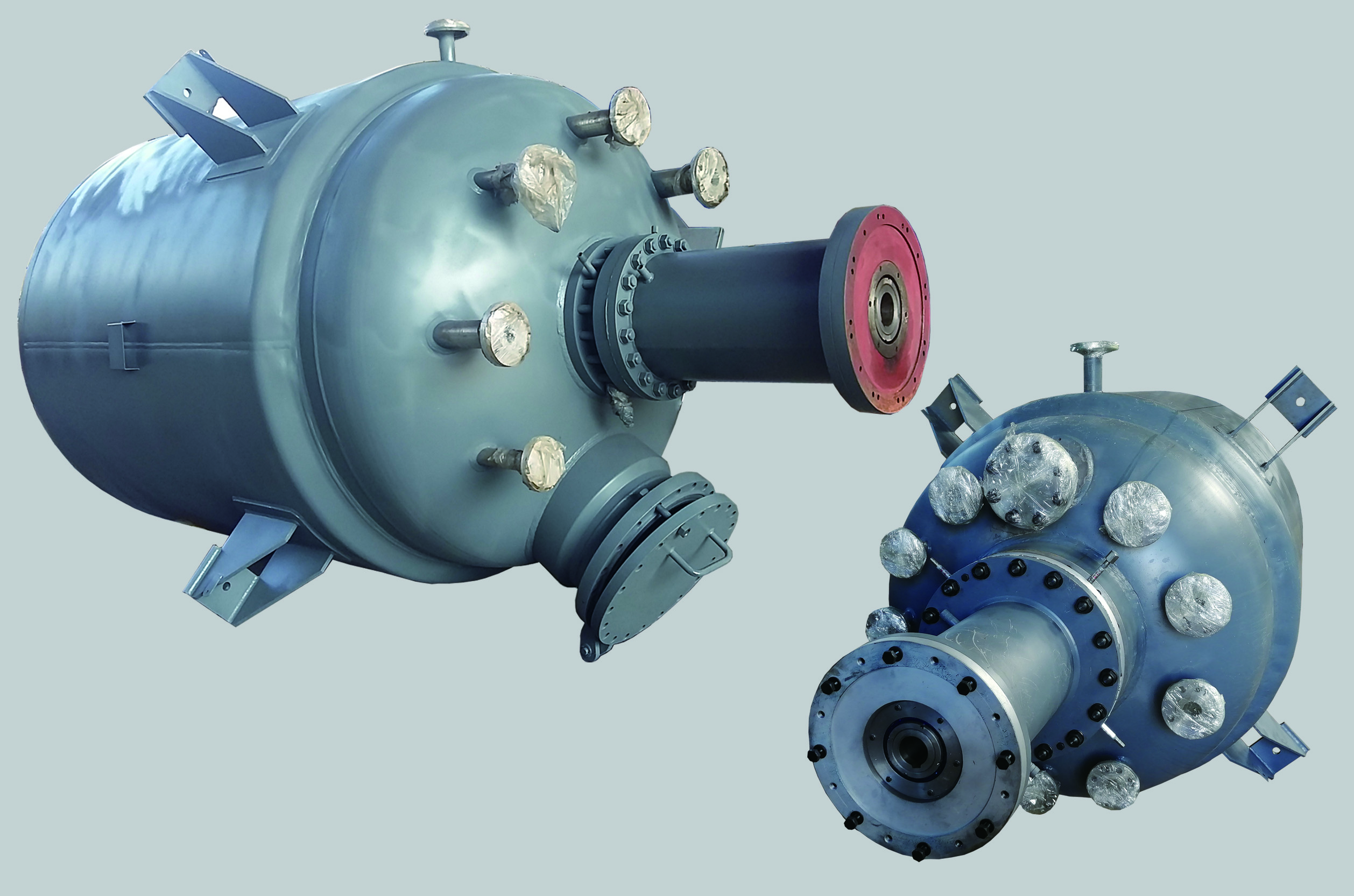
We built the reactor in Hastelloy, using the two grades most commonly specified for reactor service: HASTELLOY B2 and HASTELLOY C276. Grade selection follows the medium — the specific chloride chemistry, oxidising or reducing character, temperature and pressure together determine which of the two is appropriate.
Solid Hastelloy is expensive, and on a pressure vessel that expense is driven mostly by wall thickness. To control cost without giving up corrosion resistance, we use explosively bonded clad plate: a Hastelloy liner plate explosion-bonded to a carbon steel or stainless steel base plate. The base plate carries the structural strength requirement, and the liner carries the corrosion requirement. The two functions are separated, so expensive alloy is only used where it actually does work — on the wetted surfaces.
That approach lets a pressure vessel meet both the strength and the corrosion requirement at a materially lower cost than solid alloy construction, and it is the standard route for industrial pressure vessels in these materials.
The reactor was constructed in a nickel-based alloy selected for the chloride service, giving a service life appropriate to the conditions where 316L would have failed short.
Using explosively bonded clad plate, where the application allows it, kept the cost of that corrosion resistance down. The liner plate satisfies the corrosion requirement and the base plate satisfies the strength requirement, so the vessel is not paying for solid alloy thickness across its full section.
Grade selection is not generic: B2 and C276 cover different chloride environments, and the correct one is determined by the medium chemistry and temperature rather than by the label "Hastelloy".